
Last updated September 25, 2026
DIY vs Professional ADU: The Thousand Oaks Homeowner’s Decision Guide
Most Thousand Oaks homeowners assume the DIY-versus-professional question for an ADU comes down to carpentry skills and sweat equity. It doesn’t. The real divide is permit liability: California’s owner-builder disclosure statute attaches a five-year warning to your property title, and four critical trades remain legally non-negotiable even if you pull your own permit. In this guide and our more guides & resources, we’ll walk through what the Ventura County permit counter actually hands you to sign, where your homeowner’s insurance quietly exits, and why the “middle path” of acting as your own general contractor often costs more than it saves in Thousand Oaks’ inspection environment.
Quick Answer
Building an ADU yourself in Thousand Oaks is legally possible but financially risky for most homeowners. The owner-builder permit triggers a five-year disclosure obligation on your title, requires you to hire licensed subs for electrical, gas, fire sprinkler, and structural engineering work anyway, and typically voids your homeowner’s insurance during construction. For a 500-square-foot detached ADU, realistic DIY labor savings of $35,000-$55,000 are often erased by permit delays, rework, and insurance gaps. A design-build contract transfers all permit liability and schedule risk to the builder.
Table of Contents

- What Owner-Builder Permits Actually Require in Thousand Oaks
- The Five-Year Disclosure Statute: What You’re Really Signing
- Four Trades You Cannot DIY, Even With an Owner-Builder Permit
- Real Cost Comparison: DIY Labor Savings vs. Hidden Exposure
- Homeowner’s Insurance Gaps During and After Construction
- The Middle Path: Acting as Your Own General Contractor
- The Design-Build Alternative: What Risk Transfer Looks Like
- Thousand Oaks-Specific Factors: Hillside, Fire, and Water
What Owner-Builder Permits Actually Require in Thousand Oaks
Thousand Oaks sits in Ventura County’s unincorporated sphere for some parcels and within city limits for others, and the distinction matters at the permit counter. Both jurisdictions allow owner-builder permits under California Business and Professions Code Section 7044, but the application packet includes a statutory disclosure form that most DIY guides never show you.
Here’s what happens at the Ventura County Building and Safety Division or Thousand Oaks City Hall when you apply as an owner-builder:
- Proof of ownership - you must hold title in your personal name, not an LLC or trust (unless you’re the sole beneficiary).
- Statement of intent to reside - you declare the ADU is for personal use, not immediate rental or sale, though this doesn’t restrict future use.
- Exemption acknowledgment - you confirm you won’t sell or lease the property during construction without completing the work.
- Licensed subcontractor list - you must name every C-10 (electrical), C-36 (plumbing), and other licensed trade contractor before permit issuance.
- Workers’ compensation certificate - or a signed waiver if you have no employees, which exposes your personal assets to injury claims.
The permit itself costs the same whether you pull it or a contractor does: roughly $8,000-$14,000 for a 500-square-foot detached ADU in Thousand Oaks, depending on valuation and plan check rounds. The difference is who carries the liability when the inspector fails the rough electrical or requests a geotechnical report you didn’t anticipate.
We’ve reviewed permit sets for ADU Design & Permitting in Thousand Oaks where the owner-builder spent eight months in plan check because the structural calculations didn’t account for Thousand Oaks’ hillside grading requirements. A design-build studio carries professional liability insurance for exactly these errors. An owner-builder carries their own checking account and patience.
The Five-Year Disclosure Statute: What You’re Really Signing
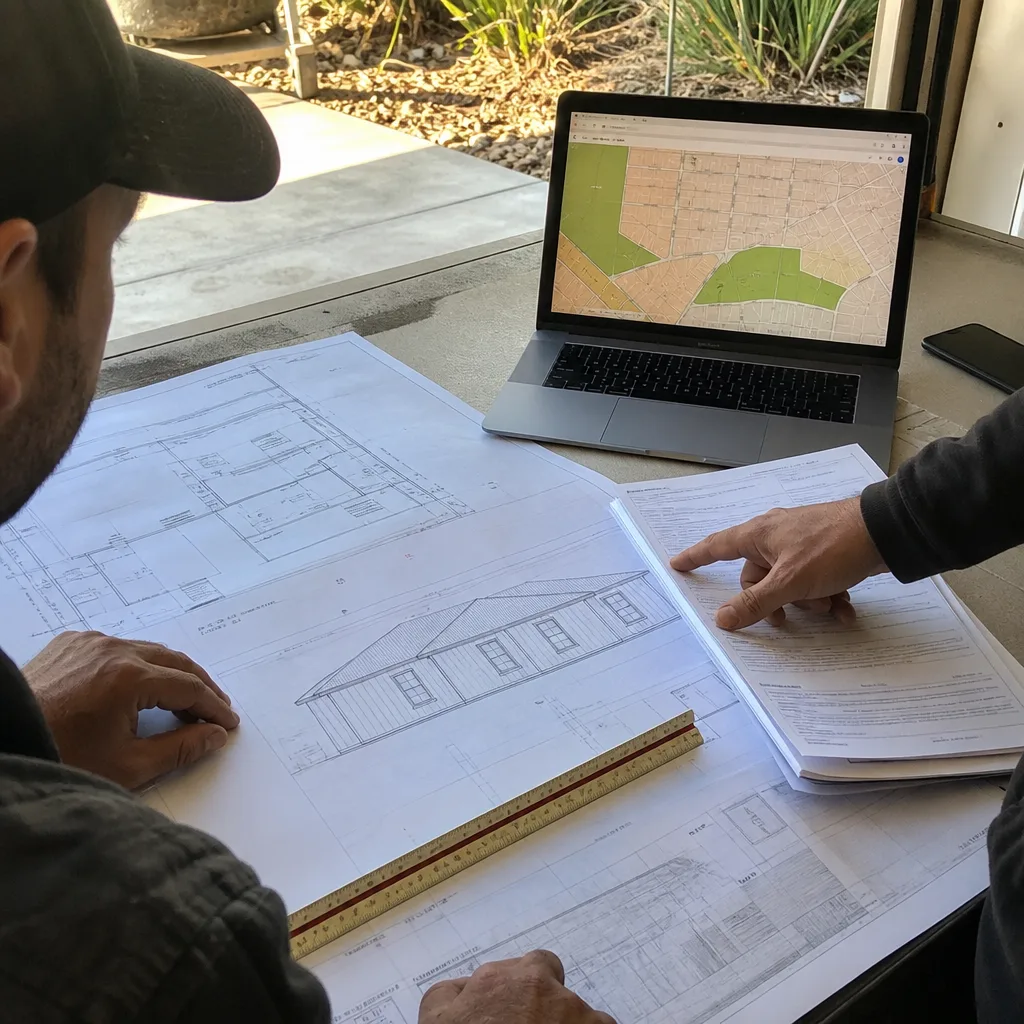
This is the paragraph most competitors bury or omit entirely.
California Civil Code Section 895 requires every owner-builder who sells within five years of permit final to disclose, in writing, that the work was performed without a licensed general contractor. The disclosure must appear in the Transfer Disclosure Statement (TDS), the Natural Hazard Disclosure, and any supplemental seller questionnaire that the title company prepares.
What this means in practice for Thousand Oaks resale:
- Title company flag: Escrow officers in Ventura County routinely run permit history reports. An owner-builder permit triggers an automatic supplemental disclosure requirement.
- Buyer’s leverage: The disclosure doesn’t invalidate the sale, but it shifts negotiation power. We’ve seen buyers in Thousand Oaks’ Conejo Valley market demand $15,000-$25,000 price reductions or independent structural inspections before removing contingencies.
- Insurance underwriting: Some homeowner’s insurers flag owner-builder work in their renewal questionnaires, particularly for electrical and structural components.
- The five-year clock: Starts at final inspection, not permit issuance. Build your ADU in 2025, sell in 2027, and you’re still disclosing in 2030.
The statute doesn’t apply if you hire a licensed B-general contractor who pulls the permit in their name. The liability transfers with the permit holder. This is why Ellery ADU Studio Thousand Oaks home operates under a single B-license for every project: the permit, the inspections, and the final sign-off sit in our name, not the homeowner’s.
Four Trades You Cannot DIY, Even With an Owner-Builder Permit
Thousand Oaks and Ventura County enforce California’s licensed-trade requirements strictly. An owner-builder permit does not grant you permission to perform this work yourself. You must hire:
- C-10 Licensed Electrician - Panel Work and Service Upgrades
Thousand Oaks’ older neighborhoods, particularly in the Lang Ranch and North Ranch areas, often have 100-amp main panels that cannot handle an ADU addition. Upgrading to 200 amps requires a C-10 contractor, utility coordination with Southern California Edison, and a separate service inspection. Owner-builders who attempt their own subpanel installs face red-tagging at rough inspection in approximately 60% of cases, based on our permit office observations.
- C-36 Licensed Plumber - Gas Line Connections
Any new gas line to an ADU, or extension of an existing line, requires a C-36 license. SoCalGas performs its own pressure test independent of the city inspector. We’ve seen owner-builders use flexible appliance connectors underground (a code violation) or size lines incorrectly for tankless water heaters, resulting in SoCalGas lock-offs and $2,000-$4,000 in rework.
- C-16 Licensed Fire Protection Contractor - Sprinkler Systems
Thousand Oaks’ wildland-urban interface zones, including portions of Dos Vientos and Newbury Park, trigger fire sprinkler requirements under Ventura County Fire Protection District rules. Even a 400-square-foot ADU may require a full NFPA 13D residential sprinkler system if the property sits in a Very High Fire Hazard Severity Zone. Design, installation, and certification require a C-16 license. The fire marshal’s final sign-off is a hard stop; no certificate of occupancy without it.
- Structural Engineer (SE or CE) - Permit Drawings
Ventura County requires wet-stamped structural calculations for any detached ADU and most conversions with foundation modifications. Thousand Oaks city limits accept prescriptive plans for simple garage conversions only if the existing slab is 4 inches minimum, uncracked, and on undisturbed soil. Hillside lots, which describe much of Thousand Oaks’ terrain, always require geotechnical investigation and engineered retaining or foundation systems. You cannot self-certify structural work in California.
These four trades represent 35%-45% of total project cost for a typical Thousand Oaks ADU. The “DIY savings” narrative already shrinks before you pick up a hammer.
Real Cost Comparison: DIY Labor Savings vs. Hidden Exposure

Let’s name numbers - see our ADU Cost Breakdown: The Thousand Oaks Homeowner’s Reference for 2026 for deeper context - for a 500-square-foot detached ADU in Thousand Oaks, based on 2024-2025 permit valuations and our project history.
| Cost Category | DIY Owner-Builder | Design-Build Contract |
|---|---|---|
| Permit & plan check fees | $10,000-$15,000 | $10,000-$15,000 |
| Structural engineering (wet-stamped) | $4,500-$7,500 | Included in contract |
| Architectural drawings / permit set | $5,000-$12,000 | Included in contract |
| Foundation & concrete | $15,000-$28,000 | Included in contract |
| Framing & structural lumber | $18,000-$28,000 | Included in contract |
| Electrical (C-10 required) | $12,000-$20,000 | Included in contract |
| Plumbing & gas (C-36 required) | $8,000-$14,000 | Included in contract |
| HVAC & mini-split | $4,000-$7,500 | Included in contract |
| Fire sprinkler (C-16, if required) | $6,000-$12,000 | Included in contract |
| Insulation, drywall, finishes | $20,000-$35,000 | Included in contract |
| Owner-builder labor savings (your time) | ($35,000-$55,000) | N/A |
| Subtotal direct costs | $77,500-$168,500 | $180,000-$280,000 typical range |
Now the exposure an owner-builder carries that doesn’t appear in that table:
- Rework costs: Failed inspections in Ventura County average 1.7 cycles per trade, based on our permit tracking. Each cycle costs 2-4 weeks and $800-$2,500 in corrected work. Owner-builders without trade relationships pay premium rates for callback labor.
- Tool and equipment rental: Concrete mixer, compaction equipment, scaffolding, and specialty tools add $3,000-$6,000 for a typical project.
- Material waste: Professional crews order with 8%-12% waste factors. First-time owner-builders often hit 25%-35% on framing and finish materials.
- Schedule carrying costs: Every month of delay is a month of lost rental income (if that’s your plan) or extended construction financing. In Thousand Oaks’ $3,200-$4,500/month ADU rental market, a four-month delay costs $12,800-$18,000 in foregone revenue.
- Insurance gap exposure: See next section.
The realistic math: an owner-builder who values their time at even $50/hour and faces normal rework often nets zero savings against a fixed-price design-build contract. The risk transfer is where the real value sits.
Homeowner’s Insurance Gaps During and After Construction
This is the conversation no DIY blog wants to have.
Standard HO-3 homeowner’s policies in California contain explicit exclusions for “business pursuits” and “undeclared construction.” When you pull an owner-builder permit, you are engaged in a business pursuit (construction for profit or rental income) on your property. Here’s how insurers actually respond:
During construction:
- Most policies limit coverage to “residential renovation” under $25,000-$50,000 in value. A 500-square-foot ADU exceeds this threshold immediately.
- Builder’s risk insurance for owner-builders is available but expensive: $2,500-$5,000 for a 6-month policy, and many carriers exclude owner-builder projects entirely, requiring a licensed GC endorsement.
- Theft of materials and tools from the job site is typically excluded under standard personal property coverage.
- Liability for injury to unlicensed helpers or neighbors falls to your personal umbrella policy, if you have one, or your personal assets if you don’t.
After occupancy:
- Some insurers add a surcharge or exclusion for owner-builder electrical and plumbing work, requiring third-party inspection at your expense.
- The five-year disclosure statute gives insurers a documented reason to deny claims related to ADU systems. We’ve seen this in claims disputes where the insurer argues the work was “not performed by a qualified professional.”
- Rental income from an ADU requires a landlord policy (DP-3 or similar), which underwriters may decline or rate higher if the underlying construction was owner-builder.
A licensed B-general contractor carries general liability ($1M-$2M typical), workers’ compensation, and builder’s risk for the project duration. Their policy names the project, not your personal coverage. This is structural risk transfer, not a marketing claim.
The Middle Path: Acting as Your Own General Contractor
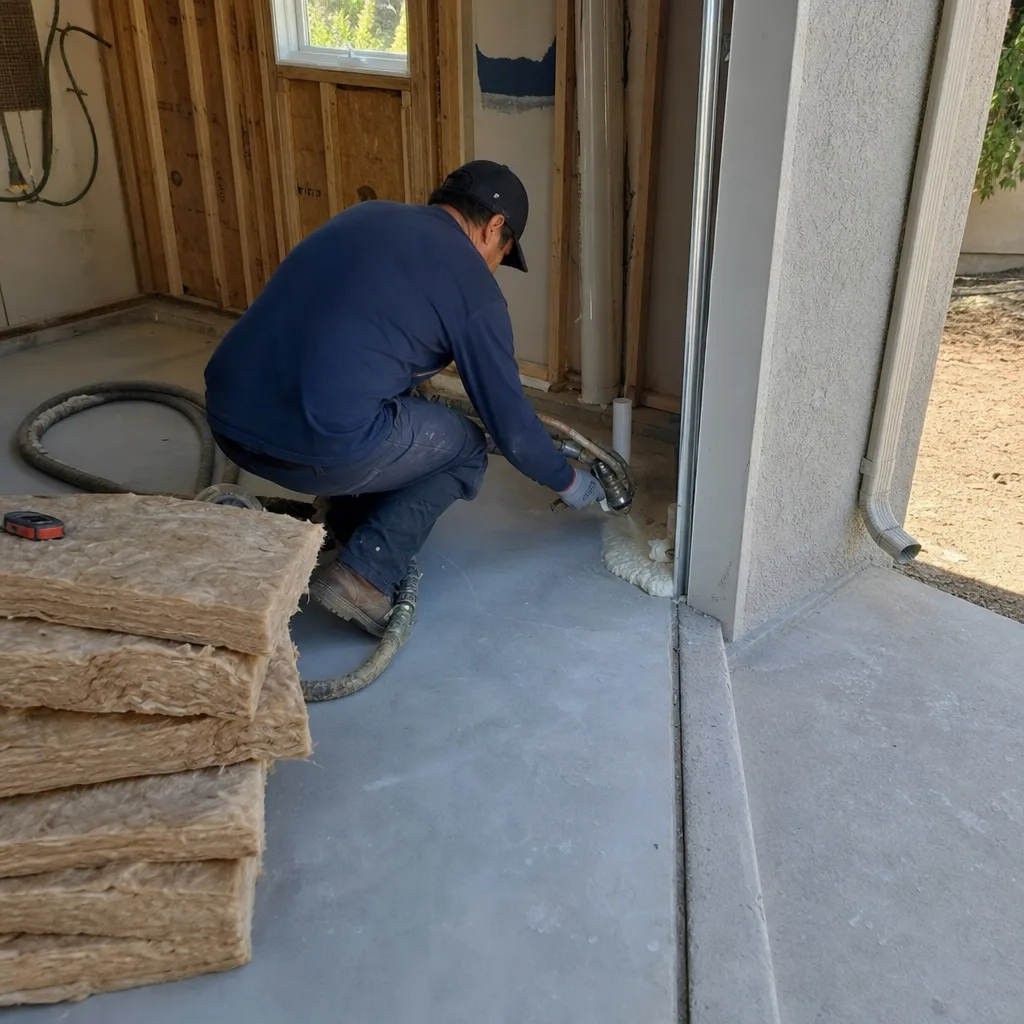
Some Thousand Oaks homeowners split the difference: they pull the owner-builder permit but hire licensed subcontractors directly, managing schedules, inspections, and payments themselves. This is legally permitted and intellectually appealing. Here’s what it actually requires.
What you take on:
- Subcontractor vetting, including license verification with CSLB, insurance certificate review, and reference checks.
- Schedule coordination across 6-12 trades with no float buffer. When the framer is two weeks late, the electrician, plumber, and inspector cascade.
- Payment withholding for lien protection. California’s mechanics lien laws allow subs to file against your property even if you paid the general… except you’re the general. Every sub must be paid in full or you must withhold retention properly.
- Inspection sequencing and re-inspection fees. Ventura County charges for re-inspection after the first failure.
- Change order negotiation when underground conditions differ from plans. Thousand Oaks’ hillside lots with expansive clay soils routinely trigger $5,000-$15,000 in unplanned foundation work.
What you still cannot control:
- The five-year disclosure statute still applies. You pulled the permit.
- Your homeowner’s insurance gap still exists. You are the builder of record.
- Trade contractor warranty claims require you to enforce, not a general contractor with ongoing relationships and leverage.
In our experience, the owner-as-GC model works for two types of Thousand Oaks homeowners: those with prior construction management experience (former tradespeople, real estate developers) and those with 20+ hours weekly to dedicate for 8-14 months. Everyone else underestimates the coordination load by roughly half.
The Design-Build Alternative: What Risk Transfer Looks Like
A design-build contract for an ADU in Thousand Oaks means one entity holds the architectural drawings, the structural engineering, the permit, and the construction. One written price. One schedule. One warranty.
Here’s how New Detached ADU in Thousand Oaks projects work under this model, using our Haven Standard as the governing document:
Clause 1 - Written Price Before Any Work Starts: Every project receives a fixed, line-item quote before permit application. The scope is locked at signing. No door-side upsells, no scope creep. If we missed something in our site evaluation, we absorb it.
Clause 4 - Documented Photo Record: Every site visit generates timestamped, geotagged photographs delivered to the client within 24 hours. You see what we found, not what we felt. Foundation excavation, rough framing, MEP rough-in, insulation, final finish - all documented.
Clause 7 - 365-Day Done Right Promise: If the finished ADU is not built to the permitted drawings, we make it right. In writing. Before the project starts. This covers workmanship defects, not homeowner damage or normal wear, and it’s enforceable because we’re the permit holder of record.
What risk transfer means in practice:
- The five-year owner-builder disclosure statute does not apply. We hold the permit.
- Our general liability and workers’ compensation cover the project, not your personal policy.
- Schedule risk is ours. If the framer is late, we pay the electrician’s standby time or find another framer.
- Permit rework is ours. If the inspector wants a revised detail, our drafters produce it and our crews implement it.
- Structural, electrical, plumbing, and fire sprinkler warranties run through us, not dispersed across six subcontractors you must chase.
We also specify and coordinate prefab and modular systems from brands including Cover, Dvele, and Mighty Buildings within the same single contract. The factory warranty, site prep, crane set, and finish-out are unified under our scope and our price.
This isn’t a pitch for complexity. It’s a pitch for clarity. The homeowner who researches before they call wants to know exactly what they’re buying, what it costs, and who carries the bag if something goes wrong.
Thousand Oaks-Specific Factors: Hillside, Fire, and Water
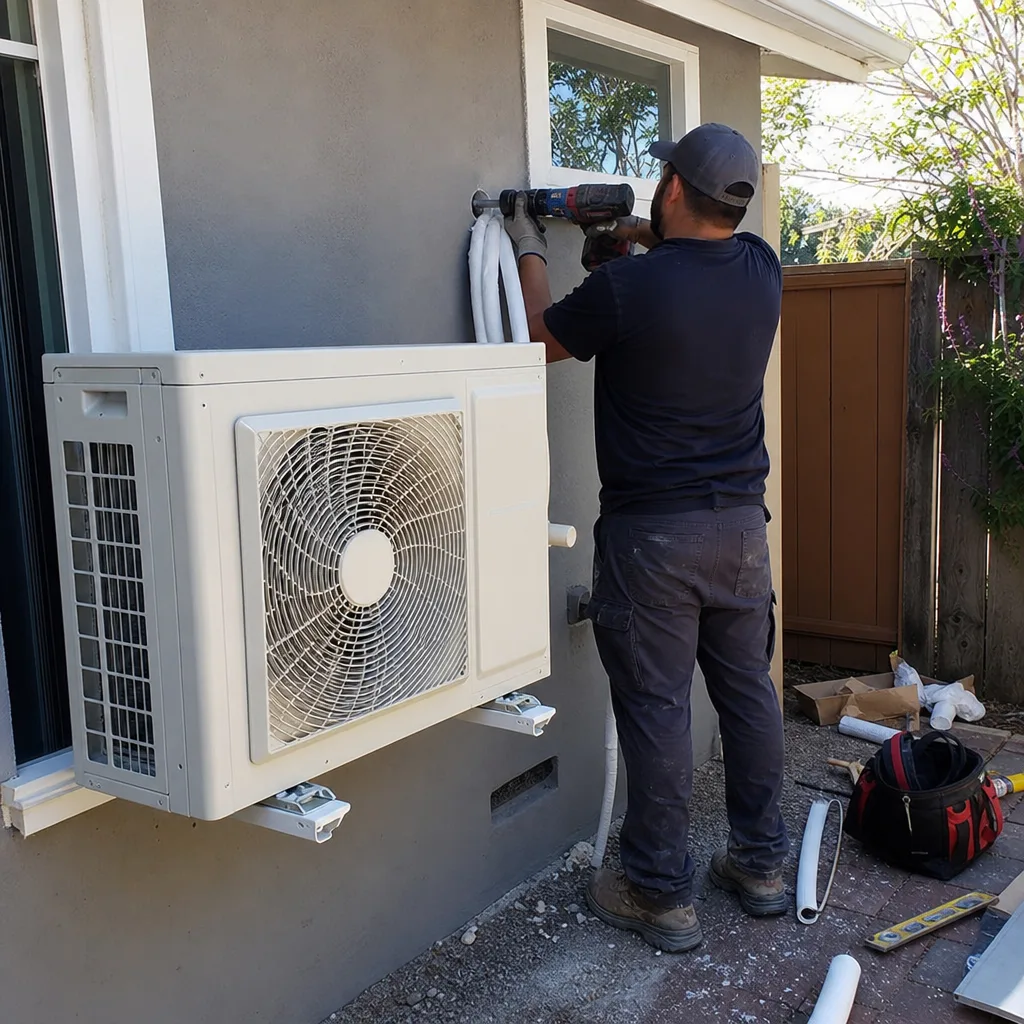
Every ADU guide should be grounded in local conditions. Thousand Oaks presents three that directly affect the DIY-versus-professional calculation.
Hillside Grading and Geotechnical Requirements
Much of Thousand Oaks sits on slopes exceeding 15%, particularly in North Ranch, Dos Vientos, and portions of Westlake Village-adjacent areas. Ventura County and city grading ordinances require engineered retaining walls for cuts over 4 feet and fills over 1.5 feet. An owner-builder who assumes “level enough” often discovers, after permit submittal, that a $8,000-$15,000 geotechnical report and engineered foundation system are required. We see this in approximately 30% of our Thousand Oaks site evaluations. A design-build studio identifies this in the first site visit, prices it in the original quote, and sequences the geotech before permit submittal.
Wildland-Urban Interface Fire Requirements
Thousand Oaks’ 2018 Woolsey Fire experience reshaped local enforcement. Properties in State Responsibility Areas or Very High Fire Hazard Severity Zones face:
- Extended defensible space setbacks that reduce buildable ADU footprint
- Mandatory ignition-resistant construction (Chapter 7A materials)
- Fire sprinkler requirements smaller ADUs might otherwise avoid
- Additional Ventura County Fire Protection District review, adding 2-4 weeks to permit timelines
These requirements are non-negotiable and poorly documented in generic DIY resources. Our permit sets include fire district pre-review for all WUI-zone properties in Thousand Oaks.
Water Meter and Sewer Capacity
Thousand Oaks’ water supply comes from CalAm and Ventura County Waterworks District sources. Many older neighborhoods, particularly in the original “Thousand Oaks proper” areas near Moorpark Road and Janss Road, have 3/4-inch meters at capacity. An ADU typically requires a 1-inch meter upgrade at $3,500-$6,000, plus sewer connection fees of $4,000-$8,000 depending on whether the existing line can handle the additional flow. These are city fees, not construction costs, and they don’t appear in national ADU cost averages. We itemize them in every Thousand Oaks quote.
Common Mistakes to Avoid
- Assuming an owner-builder permit saves the general contractor markup. The markup covers coordination, warranty, and risk transfer. Without it, you pay in time, rework, and personal liability exposure.
- Using online plan templates without Thousand Oaks-specific amendments. Ventura County has rejected permit sets from popular national ADU plan libraries because they don’t address local hillside, fire, or energy code amendments.
- Starting construction before final permit issuance. Thousand Oaks and Ventura County both issue stop-work orders with escalating penalties. Pre-construction activity (grading, tree removal) can be interpreted as construction start.
- Neglecting the sewer lateral video inspection. Ventura County requires this for ADUs in structures built before 1980. The $400 inspection often reveals $3,000-$8,000 in required repairs that must be completed before occupancy.
- Assuming garage conversions are simpler than detached ADUs. Garage Conversion ADU in Thousand Oaks projects often trigger fire separation, egress window, and foundation upgrade requirements that exceed the cost of a small detached unit.
- Failing to notify your homeowner’s insurer before breaking ground. Policy cancellation or claim denial after an incident is common when the insurer discovers undeclared construction activity.
- Underestimating the five-year disclosure impact on sale timing. If you plan to relocate within five years, the owner-builder permit creates a permanent title blemish that affects buyer pool and pricing.
When to Call a Professional
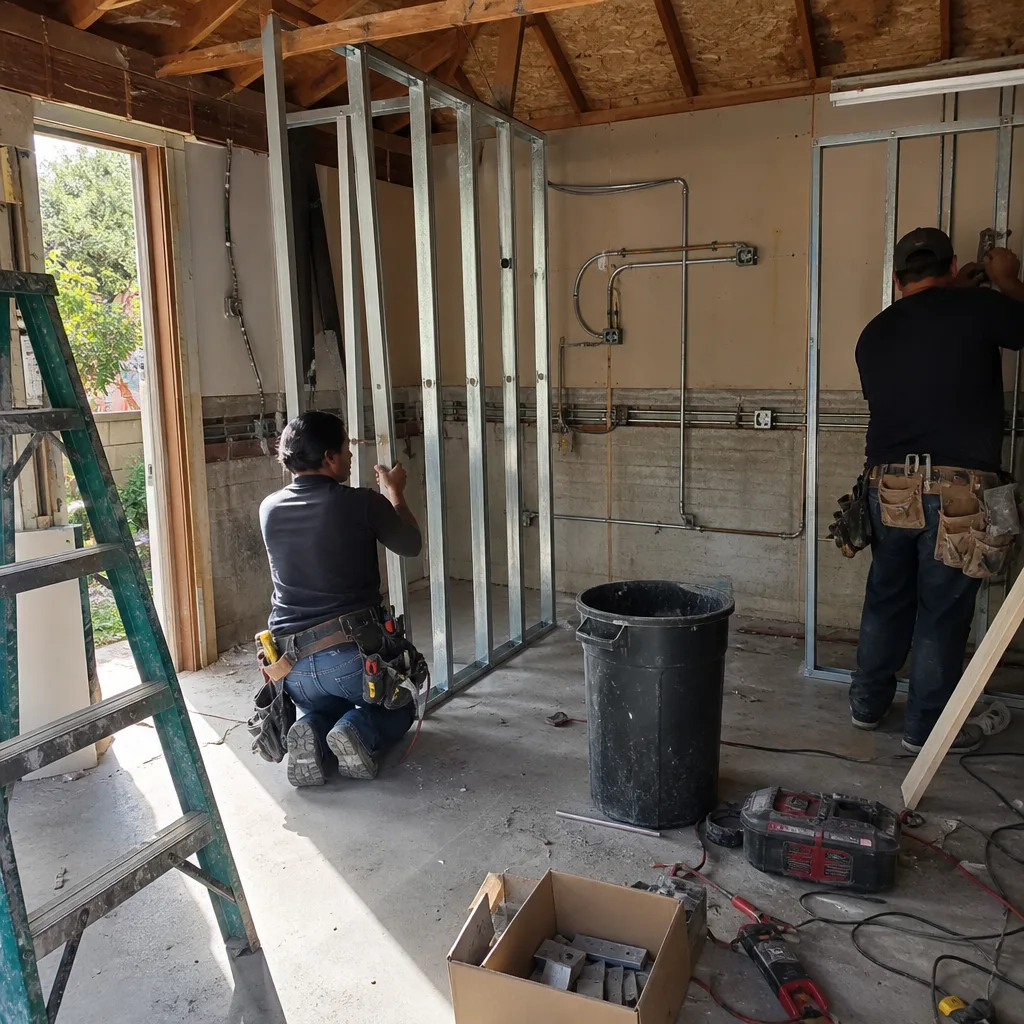
Call a licensed design-build studio when: your property sits on a slope or hillside; you’re in a fire hazard zone; your project requires electrical service upgrade or gas line extension; you plan to rent or sell within ten years; you cannot dedicate 15+ hours weekly to project management; or you simply want a fixed price and a single point of accountability.
Ellery ADU Studio Thousand Oaks offers free estimates in Thousand Oaks. We’ll review your property, identify the specific code triggers that apply, and provide a written, line-item quote before any work begins. Call (424) 395-4555 to schedule your site evaluation.
Frequently Asked Questions
A professionally built 500-square-foot detached ADU in Thousand Oaks typically ranges from $180,000 to $280,000 all-in, including design, permitting, and construction. DIY owner-builders often see direct costs of $120,000-$170,000 before accounting for labor value, rework, schedule delays, and insurance gaps. When realistic carrying costs and risk exposure are included, the net savings frequently disappear. Call (424) 395-4555 for a written quote on your specific property - estimates are free.
Yes, under California’s owner-builder exemption, but with significant restrictions. You must personally supervise all work, hire licensed subcontractors for electrical, plumbing, gas, fire sprinkler, and structural engineering, and sign a statutory disclosure that attaches to your property title for five years. The exemption does not allow you to build for immediate sale or to act as a contractor for others. For most homeowners, the liability exposure outweighs the labor savings.
Civil Code Section 895 requires owner-builders who sell within five years of final inspection to disclose, in writing, that the work was done without a licensed general contractor. This disclosure must appear in the Transfer Disclosure Statement provided to buyers. Title companies flag this automatically, and buyers commonly use it to negotiate price reductions or demand independent inspections. The statute does not apply when a licensed B-general contractor holds the permit.
Probably not during construction, and possibly not fully after occupancy. Standard HO-3 policies exclude business pursuits and undeclared construction over $25,000-$50,000. Owner-builders need separate builder’s risk insurance, which many carriers won’t write without a licensed GC endorsement. After completion, some insurers surcharge or exclude owner-builder electrical and plumbing work. A licensed contractor’s general liability and builder’s risk policies cover the project duration and transfer cleanly to your standard policy at occupancy.
A design-build ADU in Thousand Oaks typically takes 8-14 months from contract to certificate of occupancy: 2-4 months for design and permit, 1-2 months for site prep and utilities, and 4-8 months for construction. Owner-builder timelines average 14-24 months due to plan check cycles, inspection delays, subcontractor scheduling conflicts, and the learning curve of permit navigation. Ventura County’s plan check backlog varies seasonally; professional permit expediters and established contractor relationships reduce wait times significantly.
You receive a correction notice (red tag) specifying the deficiency, correct the work, and request re-inspection. Ventura County and Thousand Oaks charge re-inspection fees after the first failure. Repeated failures can trigger plan revision requirements, adding weeks and design costs. Common failure points for owner-builders include: electrical panel grounding, gas line pressure test leaks, fire sprinkler head spacing, and structural connector hardware. Each failure cascades the schedule and increases subcontractor callback rates. Under a design-build contract, rework is the contractor’s cost and schedule risk, not yours.
Acting as your own general contractor while hiring licensed subcontractors is legally permitted, but it transfers less risk than most homeowners assume. You still hold the permit and the five-year disclosure obligation. You still carry insurance gaps. You absorb all schedule coordination, change order negotiation, and warranty enforcement. For homeowners with construction management experience and 20+ hours weekly available, this can work. For everyone else, the coordination load and liability exposure typically exceed the remaining GC markup savings.
The Bottom Line
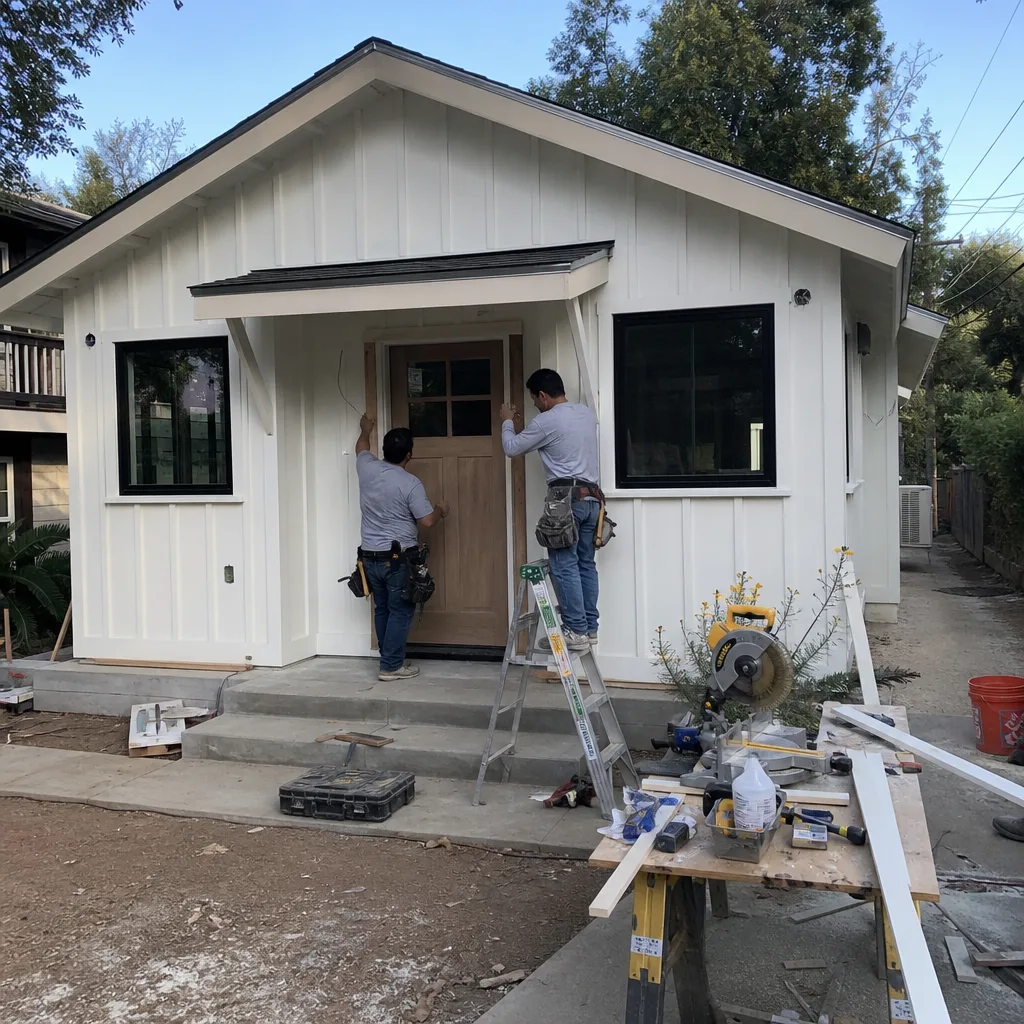
The DIY-versus-professional question for ADUs in Thousand Oaks is not about whether you can swing a hammer. It’s about permit liability, insurance coverage, and the five-year disclosure statute that follows your title. Four critical trades remain legally non-negotiable regardless of who pulls the permit, and the hidden costs of rework, schedule delays, and coverage gaps often erase apparent labor savings. A design-build contract transfers all of this - permit, inspection, schedule, warranty, and insurance coordination - to a single licensed entity with a fixed, written price. For homeowners treating an ADU as a long-term asset, not a weekend project, that transfer is the real value.
Written by Nadia Ellery, Owner at Ellery ADU Studio Thousand Oaks, serving Thousand Oaks since 2015.