
Last updated September 25, 2026
ADU Warning Signs: A Thousand Oaks Homeowner’s Reference Guide
The warning sign Thousand Oaks homeowners consistently miss isn’t a contractor showing up late or a crew that looks sloppy. It’s a proposal that doesn’t include a permit set, because that single omission predicts nearly every downstream dispute we’ve seen in 900+ ADU projects since 2015. Most ADU failure modes don’t surface during framing. They appear at permit final, at first tenant occupancy, or at resale, and the warning signs that predict them are visible at the proposal stage, not the construction stage. This guide maps those signs by phase, with specific responses you can use before you’re financially committed, and you can find more guides & resources on our blog.
Quick Answer
ADU warning signs in Thousand Oaks fall into four phases: proposal-stage red flags (no permit set in scope, vague “allowance” line items over 15%, no named project manager), permit-stage red flags (first submission ignoring Ventura County pre-application comments, no owner notification of correction letters), construction-stage red flags (work without posted permit card, substitutions without written change order), and post-completion red flags (missing certificate of occupancy, utility connections not separated). The single most predictive warning sign is a proposal that treats permitting as an afterthought rather than the core product. For a deeper dive into local requirements, see The Complete Guide to ADU in Thousand Oaks.
Table of Contents

- Proposal-Stage Red Flags That Predict Permit Failure
- Permit-Stage Red Flags in Thousand Oaks
- Construction-Stage Red Flags
- Post-Completion Red Flags
- What to Do When a Red Flag Appears
- Thousand Oaks-Specific Context: Climate, Code, and Market
- Common Mistakes to Avoid
- When to Call a Professional
- Frequently Asked Questions
- The Bottom Line
Proposal-Stage Red Flags That Predict Permit Failure
We’ve reviewed hundreds of competitor proposals through our Free Second Opinion service, and the pattern is consistent. The proposals that generate the most distress calls share three characteristics, all traceable to a single root cause: the company treats design and permitting as separate from construction, or worse, as the homeowner’s responsibility.
Red Flag 1: No Permit Set in Scope
A permit set is the complete drawing package, structural calculations, and documentation required for Thousand Oaks building plan check. It includes site plan, floor plans, elevations, sections, electrical and plumbing plans, energy calculations, and Title 24 compliance documentation. If your proposal lists “permit assistance” or “we’ll help you with the city” without specifying a complete permit set prepared by a licensed designer, you’re looking at a gap that will cost you four to twelve months and $8,000-$25,000 to close later.
The ADU Design & Permitting in Thousand Oaks process requires a permit set that meets Ventura County’s specific checklist, which differs from Los Angeles County’s requirements in setback calculations, fire access lane widths, and septic proximity rules for properties on well water. A proposal that doesn’t name the permit set as a deliverable with a completion date is a proposal that hasn’t priced the actual work.
Red Flag 2: “Allowance” Line Items Exceeding 15% of Total
Allowances are placeholder dollar amounts for selections not yet made. In a fixed-price contract governed by Haven Standard Clause 1, allowances should be minimal and specific: “$4,200 for floor covering, based on $6.50/sq ft material plus installation.” When allowances exceed 15% of the project total, the contractor has not priced the job. They’ve priced a guess, and the gap between guess and reality becomes your change order.
We’ve seen Thousand Oaks proposals with 40% in allowances, particularly on Garage Conversion ADU in Thousand Oaks projects where the existing slab condition, electrical service capacity, and roof structure are unknown until demolition. The honest response is to investigate before pricing, not to bury uncertainty in allowances. Under Clause 5 of the Haven Standard, the scope is locked at signing; no door-side upsells, no scope creep. A proposal with excessive allowances cannot meet this standard.
Red Flag 3: No Named Project Manager
The person who sold you the project and the person who builds it are rarely the same individual. If your proposal doesn’t name the project manager with direct contact information, you have no accountable party when the salesperson moves to their next prospect. In our design-build model, the project manager reviews the permit set before construction begins and is contractually responsible for building to the permitted drawings. That chain of accountability is documented in writing before any work starts.
Red Flag 4: Prefab or Modular Mentioned Without Brand Specification
Thousand Oaks has seen increased interest in prefab ADU systems, particularly from homeowners in the Lang Ranch and North Ranch areas where HOA aesthetics and faster timelines matter. But “prefab” is not a product; it’s a delivery method. A proposal that mentions prefab without specifying the manufacturer, model, and how that system integrates with Thousand Oaks foundation and utility requirements is incomplete. We specify and coordinate systems from Tuff Shed, James Hardie, Abodu, and Cover within our single-contract model, with the manufacturer’s structural drawings incorporated into our permit set. If your proposal says “prefab option available” without these specifics, the permitting path is undefined.
Permit-Stage Red Flags in Thousand Oaks
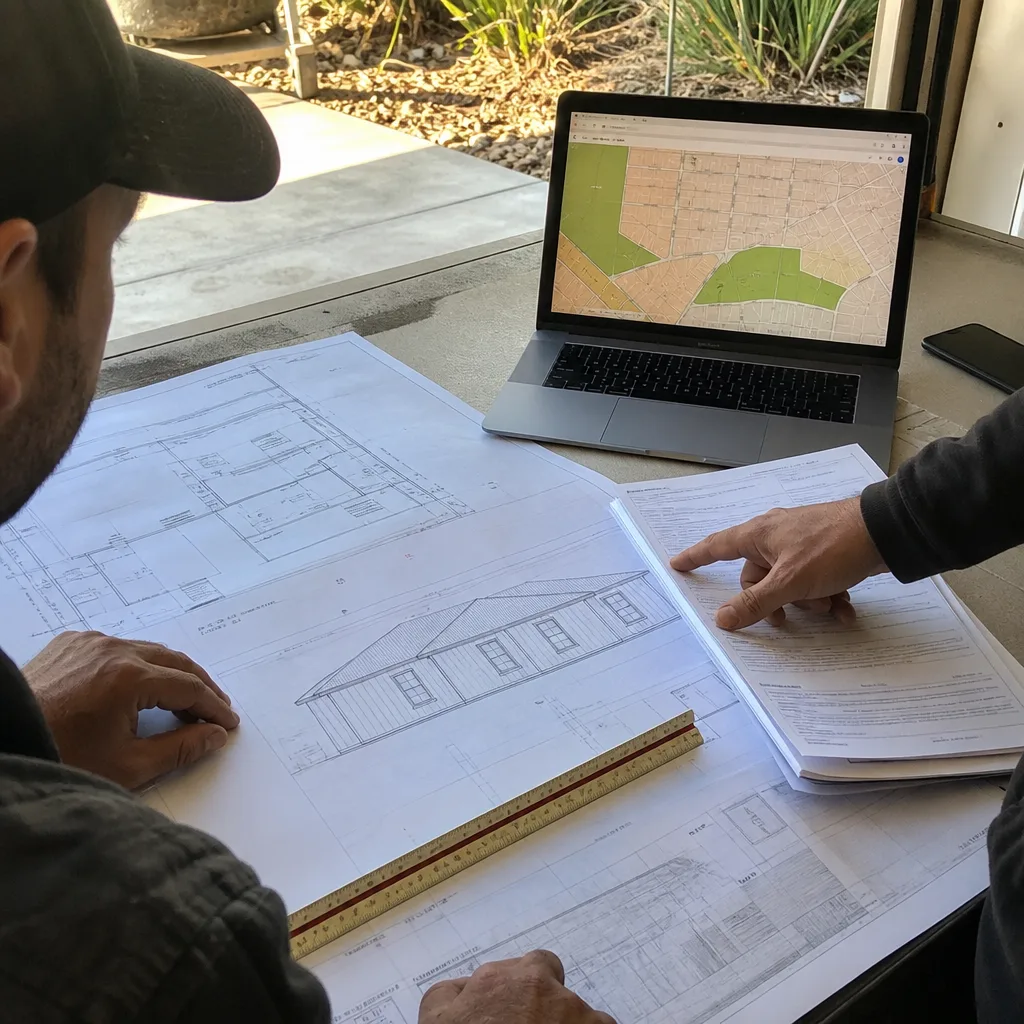
Ventura County, which administers building permits for unincorporated Thousand Oaks areas, and the City of Thousand Oaks itself maintain distinct pre-application comment lists. These are the standard objections raised at first plan check, and a competent designer addresses them before initial submission. A permit process that ignores these predictable friction points is a permit process that will cycle.
Red Flag 5: First Submission Without Response to Pre-Application Comments
Thousand Oaks’ standard pre-application comments for ADUs include verification of sewer capacity (or septic system adequacy for properties in the Santa Rosa Valley and surrounding hillside areas), confirmation that the proposed ADU doesn’t trigger additional parking requirements under local interpretation of state law, and documentation of fire separation for garage conversions. A first submission that doesn’t proactively address these items suggests the designer hasn’t done this before in this jurisdiction, or hasn’t reviewed the city’s published comment list.
The climate context matters here. Thousand Oaks’ combination of high fire severity zones in the northern hills and clay-heavy soils in the Conejo Valley means geotechnical reports are frequently triggered for detached ADUs on slopes. A permit set that doesn’t flag this possibility and include a contingency for soils testing is underprepared. We’ve seen projects stall for six months when a soils report was required mid-process because the initial geotechnical screening was skipped.
Red Flag 6: No Owner Notification of Correction Letters
Correction letters, or “corrections,” are the city’s written response when plan check finds issues. They are routine and expected. What is not routine is the contractor or designer receiving these letters without copying the owner. This creates an information asymmetry where the owner doesn’t know the permit is delayed or why. In our process, every correction letter is forwarded to the owner within 24 hours with our planned response and revised timeline. If your agreement doesn’t specify this communication protocol, request it in writing.
Red Flag 7: Permit Duration Exceeding 8 Months Without Explanation
Thousand Oaks ADU permits, properly prepared, typically move through plan check in 8-14 weeks for garage conversions and 12-20 weeks for new detached units, assuming one correction cycle. A permit pending beyond 8 months without a specific, documented reason (such as a complex hillside grading plan or a water availability determination from CalAm) indicates either repeated plan check failures or passive management. Ask for the permit number and check status directly with the city; this is public information you have every right to verify.
Construction-Stage Red Flags
The construction phase offers the most visible warning signs, but by this point, the homeowner is typically financially committed and emotionally invested. The key is recognizing which signs require immediate pause versus normal project friction.
Red Flag 8: Work Proceeding Without Posted Permit Card
California law requires the permit card to be posted visibly at the job site. Its absence means either the permit hasn’t issued, the contractor is working outside permit scope, or the card has been removed to obscure the permit status. In any case, work should pause until the card is visible. Insurance and liability coverage may be void for unpermitted work, and resale disclosure requirements in Thousand Oaks mandate permit history for ADUs.
Red Flag 9: Substitutions Made Without Written Change Order
Material substitutions happen: a specified window lead time extends, a flooring product discontinues. The warning sign is not the substitution itself but the documentation. Under Haven Standard Clause 5, any change to the permitted drawings or specified materials requires a written change order with cost impact, signed by both parties, before the substitution is installed. Verbal approvals, “it’s the same thing” assurances, or post-installation notification are all violations of this protocol and predict broader scope management problems.
This is particularly relevant for New Detached ADU in Thousand Oaks projects where fire-rated assemblies and energy code compliance depend on specific product certifications. A window swapped for a “similar” unit without verifying NFRC ratings can fail inspection and require removal.
Red Flag 10: Inspector Visits Not Communicated to Owner
Inspections are the owner’s verification that work meets code. A contractor who doesn’t notify you of scheduled inspections, or who requests you not attend, is separating you from quality verification. Our protocol includes 48-hour notice of all inspections, with the inspector’s name and contact, and a photo record of the inspection result uploaded to the client portal within 24 hours. If your contractor treats inspections as internal events, ask why.
Red Flag 11: Foundation or Framing Visible Without Your Photo Documentation
These are the structural elements you cannot verify after closure. A contractor who frames over a foundation before you or your representative has documented the rebar placement, post-tension cable locations, or hold-down anchor bolts is asking for trust without evidence. Our documented photo record on every visit, delivered to the client, includes these critical verification points. If your contract doesn’t specify photo documentation, take your own and store them with the permit set.
Post-Completion Red Flags

The period between final inspection and full operational occupancy contains warning signs that affect financing, insurance, tenancy, and resale. These are the most expensive to address retroactively.
Red Flag 12: No Certificate of Occupancy Delivered to Owner
The Certificate of Occupancy (C of O) is the city’s formal declaration that the ADU is safe for occupancy. It is required for legal tenancy, most mortgage refinancing, and proper insurance coverage. Some contractors treat the final inspection sign-off as sufficient and never request or deliver the C of O. Verify that your contract specifies delivery of the C of O to you, not just “passing final inspection.”
Red Flag 13: Utility Connections Not Transferred to ADU Address
Thousand Oaks requires separate utility metering or clear sub-metering documentation for ADUs intended as rental units. Southern California Gas and Southern California Edison have specific ADU service requirements that differ from accessory structure rules. A project is not complete until the utility accounts are established or the sub-metering agreement is documented. We’ve encountered owners who discovered a year post-construction that their “completed” ADU was still drawing power through the main house panel without proper load calculations, creating both safety and billing complications.
Red Flag 14: No As-Built Drawings
As-builts are the drawings showing what was actually built, including any field changes from the permitted plans. They are essential for future remodeling, utility location, and dispute resolution. California does not universally mandate as-builts for residential ADUs, but their absence creates information gaps that surface at the worst moments: a plumbing leak requiring wall demolition, an electrical upgrade requiring panel location verification, a resale inspection finding discrepancies with permitted plans. Our deliverables include as-built documentation as standard; if your proposal doesn’t mention them, add this requirement.
What to Do When a Red Flag Appears
Generic advice says “trust your gut” or “get a second opinion.” Here are specific responses by phase.
At Proposal Stage
- Request the permit set as a named deliverable with a completion date and a sample from a completed project.
- Calculate allowance percentage: total allowances divided by project total. If over 15%, request itemization or a preliminary investigation to reduce uncertainty.
- Ask for the project manager’s name, license number, and three references from projects permitted in Thousand Oaks or Ventura County within the past 18 months.
- Verify the contractor’s license at cslb.ca.gov; confirm active status and that ADU construction is within the license classification.
At Permit Stage
- Request a copy of the pre-application comment response letter before first submission.
- Establish written protocol for correction letter forwarding, with a 48-hour maximum response commitment.
- Verify permit status independently using the city’s online portal or by phone with the permit number.
- If permit duration exceeds 6 months, request a written explanation with specific correction items and resubmission dates.
At Construction Stage
- Do not allow work to proceed without visible permit card; photograph the card with date stamp.
- Stop work for any substitution without written change order; resume only after signed documentation.
- Attend inspections when possible; request inspector contact information for direct communication.
- Photograph all structural elements before enclosure; store with project records.
At Post-Completion Stage
- Request C of O in writing with a 14-day deadline; follow up with the city directly if not received.
- Contact utilities to confirm separate service or documented sub-metering agreement.
- Request as-built drawings within 30 days of final inspection; review against your own photo documentation.
- Retain all documentation in a single file for resale disclosure and future reference.
Thousand Oaks-Specific Context: Climate, Code, and Market
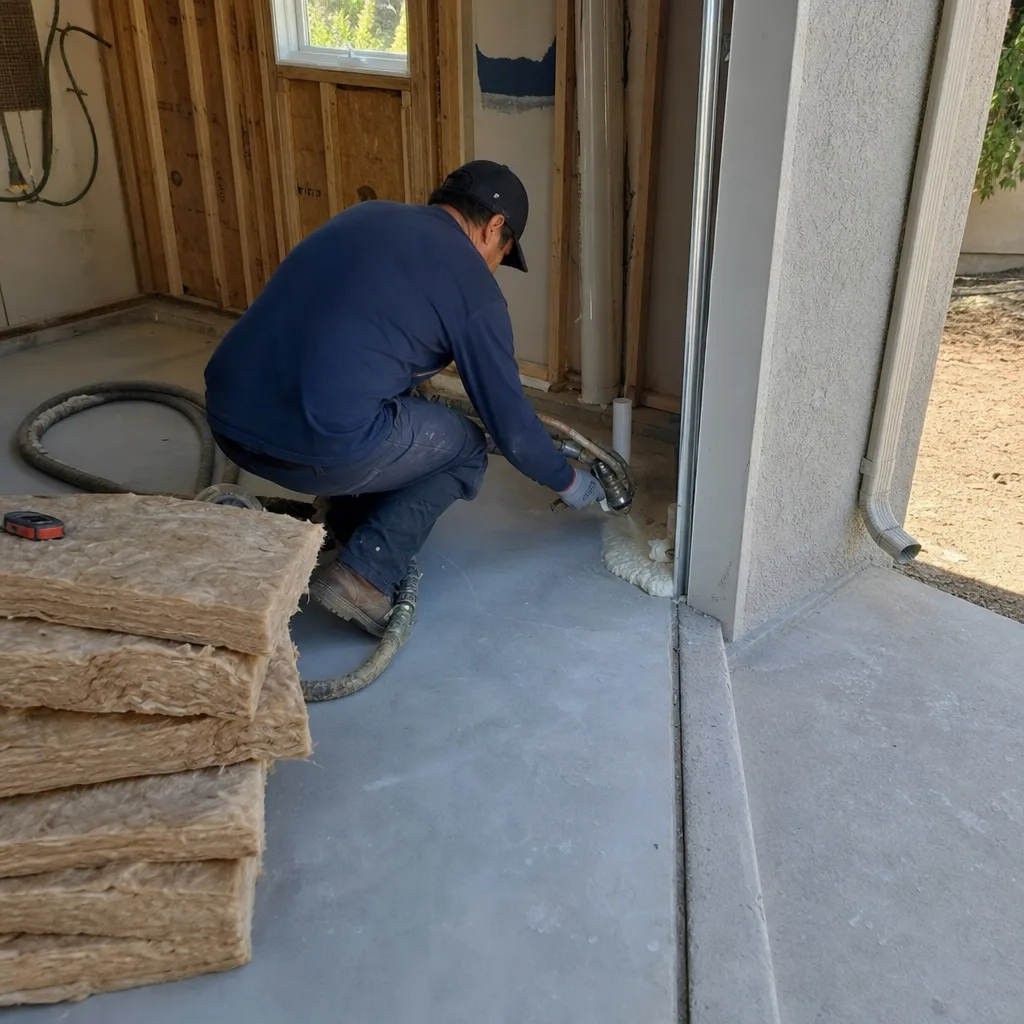
Thousand Oaks presents specific conditions that amplify certain warning signs and create others unique to this market.
Fire severity zones. The northern neighborhoods, including North Ranch and portions of Lang Ranch, fall within Very High Fire Hazard Severity Zones. This triggers Chapter 7A building material requirements, extended defensible space calculations, and often additional water storage or access requirements that affect ADU placement and cost. A proposal that doesn’t address fire zone status specifically is underprepared for Thousand Oaks conditions.
Septic and water constraints. Properties in the Santa Rosa Valley and hillside areas may rely on septic systems and well water rather than municipal sewer and water. Ventura County’s septic adequacy review for ADUs requires perc test documentation and often system expansion. A proposal that assumes municipal connections without verification is a proposal that may not be buildable.
HOA considerations. Thousand Oaks has numerous planned communities with active HOAs. State ADU law limits but does not eliminate HOA restrictions. A proposal that doesn’t include HOA review and approval timeline, or that treats HOA approval as automatic, underestimates a potential 30-90 day delay.
Market context. Thousand Oaks median home values and rental rates support ADU construction costs that run higher than inland markets but with stronger long-term returns. Current garage conversion ADUs in Thousand Oaks typically range $185,000-$285,000 all-in, drawings through final inspection, while new detached ADUs range $320,000-$480,000 depending on size, site conditions, and finish level. These ranges reflect our actual project history with written prices before work started, per Haven Standard Clause 1.
Soil conditions. The Conejo Valley’s expansive clay soils create foundation design requirements that differ from sandy coastal zones. Cracked slabs, differential settlement, and retaining wall pressure are real considerations for Ellery ADU Studio Thousand Oaks home projects. A geotechnical screening, included in our standard process for detached ADUs, identifies these issues before design rather than during construction.
Common Mistakes to Avoid
- Treating the lowest initial proposal as the true cost. A proposal with 35% in allowances and no permit set may appear $50,000 lower than a complete fixed-price bid, but the final cost typically exceeds the higher bid by the time allowances resolve and permitting gaps are closed.
- Assuming state ADU law overrides all local requirements. California’s ADU statutes set minimums; cities and counties can add design, safety, and utility requirements that affect your project. Thousand Oaks has specific interpretations of parking, height, and setback rules that differ from neighboring jurisdictions.
- Neglecting to verify insurance and bonding directly. Request certificates of insurance naming you as additional insured, and verify bond status through the CSLB. Don’t accept verbal assurances or expired documents.
- Beginning construction before permit issuance. Some contractors suggest “getting a head start” while permitting proceeds. This risks stop-work orders, demolition orders for unpermitted work, and insurance coverage gaps. No legitimate schedule pressure justifies this risk.
- Failing to document condition of existing structures before work begins. For garage conversions, photograph the existing slab, walls, roof, and electrical panel before demolition. These photos protect both parties if disputes arise about pre-existing conditions versus construction damage.
- Accepting verbal promises for warranty coverage. The 365-Day Done Right Promise is documented in writing before project start, with specific triggers and response commitments. Verbal warranties are unenforceable; written warranties with unclear terms are nearly so.
- Ignoring utility capacity until late in design. Thousand Oaks properties, particularly older homes in the original city grid, may have 100-amp electrical service insufficient for ADU addition. Early service capacity verification, included in our site assessment, prevents redesign when the utility upgrade becomes apparent.
When to Call a Professional
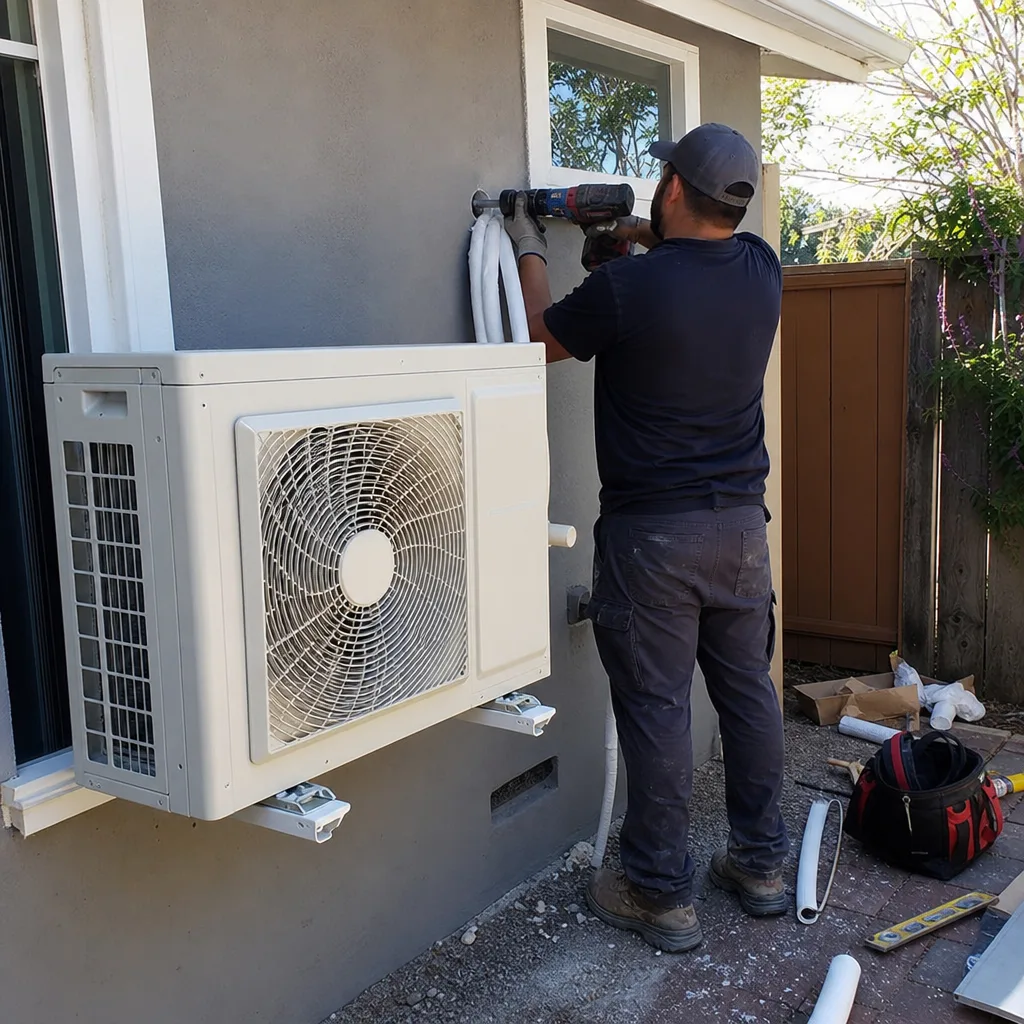
Call a design-build professional when any proposal-stage red flag appears, because this is the phase with maximum leverage and minimum sunk cost. Our How to Hire a ADU Contractor in Thousand Oaks: A Step-by-Step Guide walks through the vetting process. Once construction begins, your options narrow to dispute resolution rather than selection. Specific triggers: a proposal without permit set deliverables, allowances exceeding 15% without itemization, no named project manager with verifiable references, or any hesitation to provide license verification and insurance documentation.
Ellery ADU Studio Thousand Oaks offers free estimates in Thousand Oaks, with a Free Second Opinion available on any written estimate already in hand. We’ll review the proposal against the warning signs in this guide, identify specific gaps, and provide a written comparison. Call (424) 395-4555 to schedule. A live person answers calls 24/7.
Frequently Asked Questions
Garage conversion ADUs in Thousand Oaks typically run $185,000-$285,000 all-in, drawings through final inspection, while new detached ADUs range $320,000-$480,000. Every project is quoted with a written price before any work begins, per Haven Standard Clause 1. Site conditions, utility requirements, and finish selections move projects within these ranges. Call (424) 395-4555 for a specific estimate on your property.
Properly prepared permits typically clear plan check in 8-14 weeks for garage conversions and 12-20 weeks for new detached units, with one correction cycle. Hillside properties, septic systems, or complex utility upgrades may extend this timeline. The critical factor is permit set quality at first submission; incomplete sets cycle repeatedly. Ask any prospective designer for their first-submission approval rate in Ventura County.
Stop work immediately and request permit status in writing. Unpermitted work risks stop-work orders, required demolition, insurance coverage gaps, and resale disclosure violations. Do not accept “the permit is in process” without a permit number you can verify independently. If work has proceeded substantially, consult a construction attorney before proceeding, as remedies vary by completion percentage and jurisdiction.
Yes, with specific conditions. Prefab and modular systems from manufacturers including Tuff Shed, James Hardie, Abodu, and Cover can be permitted and installed in Thousand Oaks, but the manufacturer’s structural drawings must integrate with local foundation, utility, and fire zone requirements. The system must be specified in the permit set, not added after permit issuance. We coordinate these systems within our single-contract model with the manufacturer’s documentation incorporated throughout.
Failed final inspection requires correction of cited items and re-inspection, typically 2-4 weeks additional. The warning sign is repeated final failures or failures for items that should have been caught at rough inspection. Under our 365-Day Done Right Promise, if the finished ADU is not built to the permitted drawings, we make it right. Ensure your contract specifies responsibility for correction costs and re-inspection scheduling.
California’s Proposition 13 framework means the ADU is assessed at current market value upon completion, while the main residence retains its existing assessed value. The Ventura County Assessor’s office will conduct a supplemental assessment for the ADU’s added value. This is typically a modest increase relative to the ADU’s rental income potential, but specific impacts vary by property. We recommend consulting a property tax professional for projections on your specific situation.
The Bottom Line
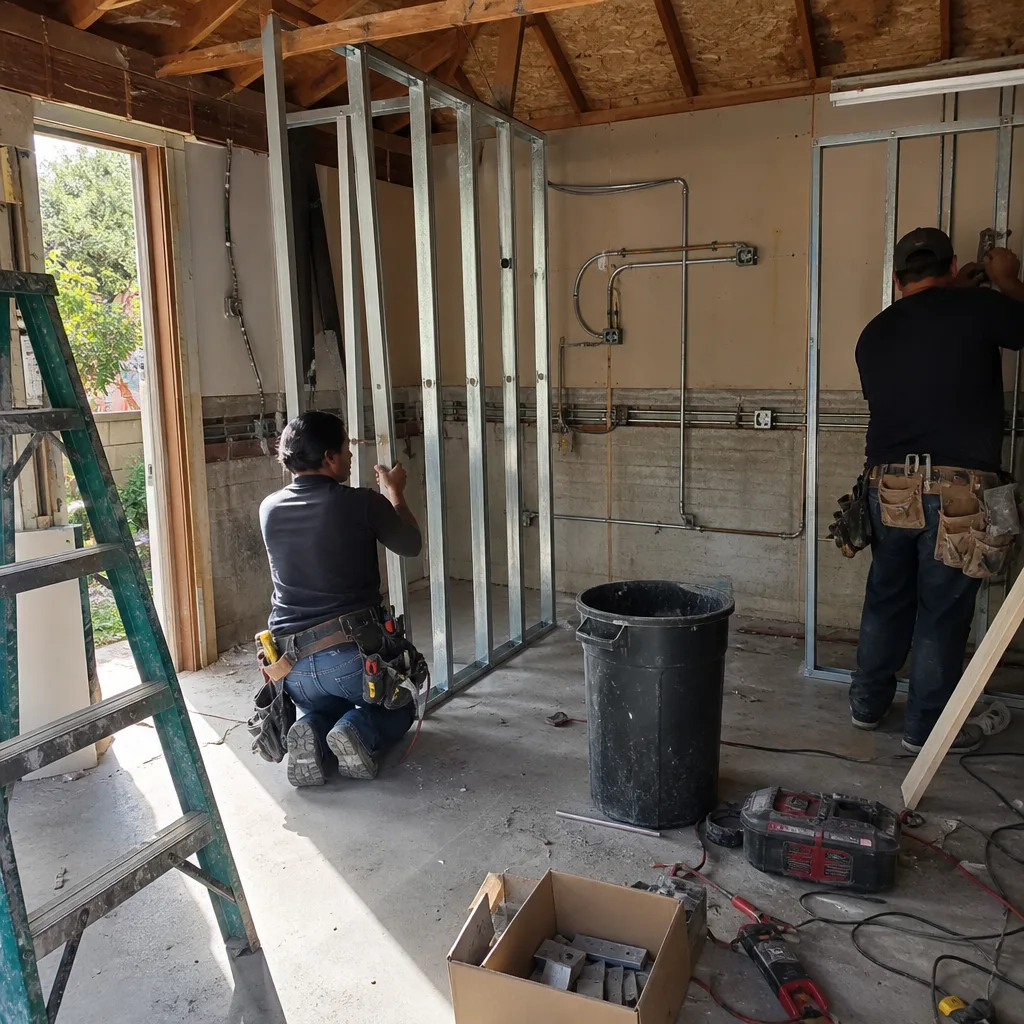
ADU warning signs in Thousand Oaks are most predictive at the proposal stage, when the single omission of a permit set from scope predicts downstream disputes over timeline, cost, and quality. The specific responses in this guide, applied at each project phase, protect the six-figure investment an ADU represents. Documentation, written commitments, and verifiable accountability, not rapport or urgency, are the markers of a project structured to succeed.
Written by Nadia Ellery, Owner at Ellery ADU Studio Thousand Oaks, serving Thousand Oaks since 2015.