
Last updated September 25, 2026
How to Hire a ADU Contractor in Thousand Oaks: A Step-by-Step Guide
Two Thousand Oaks homeowners can receive bids that are $80,000 apart for the same square footage and both numbers can be technically honest. The difference is not markup or greed. It is that each contractor priced against different assumptions about foundation depth, utility trenching distance, and whether the existing garage slab qualifies for conversion under Ventura County’s expansive soil requirements. When you hire an ADU contractor in Thousand Oaks, you are not shopping for a price. You are shopping for a contract structure that makes the price meaningful before the first wall goes up.
This guide - and our broader collection of more guides & resources - walks through the actual hiring sequence we have refined across 900+ ADU projects since 2015. It covers how to verify a contractor’s real permit history in Thousand Oaks, why the standard “get three bids” advice fails for design-build work, and the five documents that must appear in writing before you sign.
Quick Answer
To hire an ADU contractor in Thousand Oaks, verify their CSLB license class and ADU-specific permit history first, then select a contract structure (design-bid-build versus design-build) before requesting any pricing. Only compare written quotes that reference the same permit set, and confirm that fixed-price scope, change-order triggers, and permit-delay responsibility are defined in writing before work begins.
Table of Contents

- Why “Get Three Bids” Fails for ADU Projects
- How to Verify License, Insurance, and Permit History in Thousand Oaks
- Design-Build vs. Design-Bid-Build: The Contract Structure Decision
- How to Read an ADU Proposal: Line Items That Matter
- Red Flags Specific to ADU Contractors
- Thousand Oaks Zoning, Climate, and Code Realities
- What Must Be in Writing Before You Sign
- Common Mistakes to Avoid
- When to Call a Professional
- Frequently Asked Questions
Why “Get Three Bids” Fails for ADU Projects
The conventional advice assumes all bids describe the same thing. For a standard room addition with finished architectural drawings, that is nearly true. For an ADU, it is rarely true.
Here is what we see in Thousand Oaks. A homeowner receives three bids for a 500-square-foot garage conversion ADU. Bid A assumes the existing 4-inch slab is sufficient with a moisture barrier retrofit. Bid B assumes a 6-inch stem-wall extension after soils testing. Bid C assumes full replacement due to suspected expansive clay content in the Conejo Valley formation. None of these contractors are lying. Each made a different technical assumption because no permit set existed to lock the assumption down.
The result: the homeowner selects the low bid, discovers the slab issue in month three, and absorbs a $35,000 change order. Or worse, the contractor proceeds on the unexamined assumption and the city inspector rejects the foundation at rough inspection.
The fix is structural, not numerical. You need a single contract that covers both the permit set and the construction, so the entity that drew the foundation detail is the same entity that priced it and the same entity that warranties it. At Ellery ADU Studio Thousand Oaks home, we call this the one-contract model, and it is the core of how we have delivered 900+ ADUs since 2015 with a written price before any work starts.
Key takeaways:
- Bids without a shared permit set compare fiction to fiction
- The lowest bid often carries the highest assumption risk
- Design-build contracts eliminate the designer-versus-builder blame gap
How to Verify License, Insurance, and Permit History in Thousand Oaks
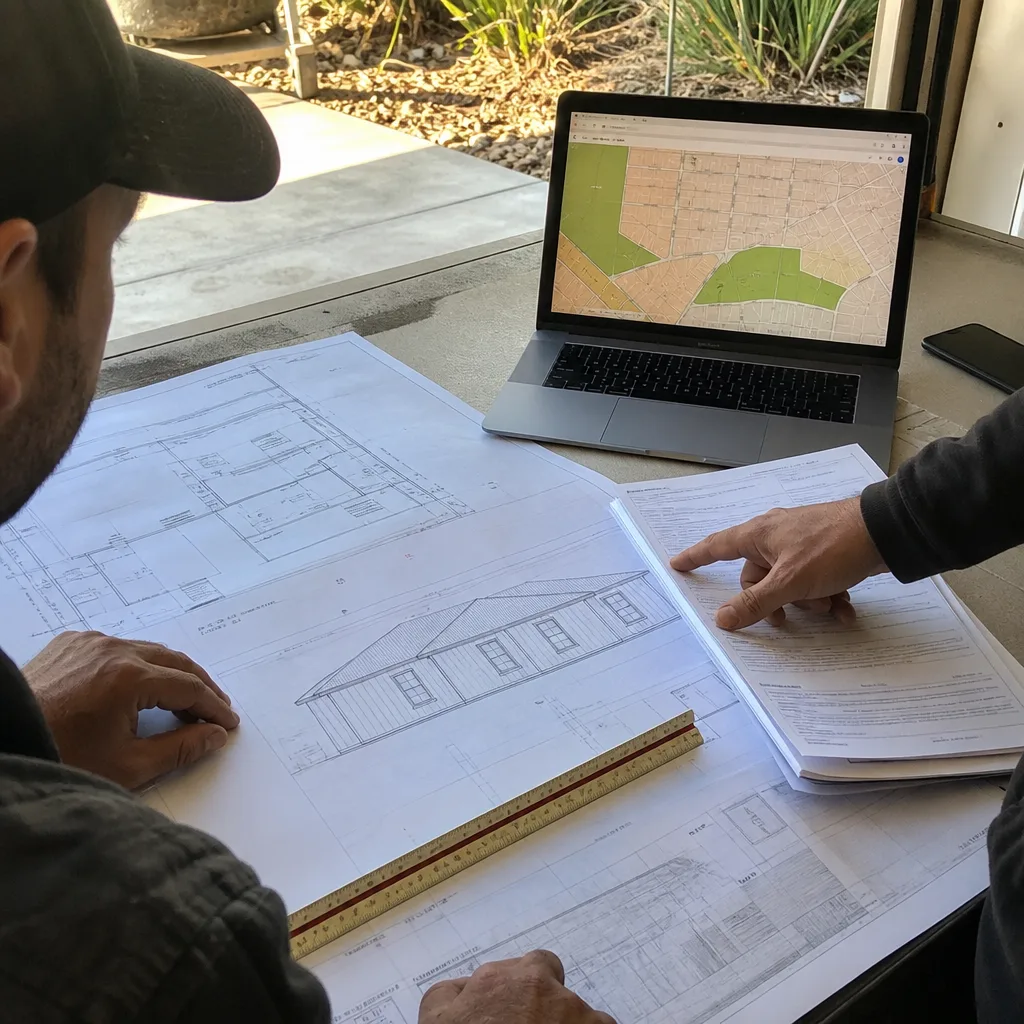
California contractors must carry specific license classes to perform ADU work legally. Verification takes ten minutes and prevents months of liability exposure.
The Five Documents to Request
- CSLB Active License - Verify at cslb.ca.gov. For ADU construction, look for Class B (General Building Contractor) or Class C-36 (Plumbing), C-10 (Electrical), or C-20 (HVAC) for trade-specific portions. A valid license number appears on every page of our site; any contractor who hesitates to provide this is not worth your time.
- License Bond and Workers’ Compensation Certificate - Request the certificate of insurance directly from the carrier, not a screenshot from the contractor. Confirm workers’ comp is active; homeowner liability for jobsite injury is not theoretical in Thousand Oaks.
- General Liability Insurance - Minimum $1 million per occurrence, $2 million aggregate. ADU projects involve foundation excavation, utility trenching, and roof work; the exposure is real.
- ADU-Specific Permit History - This is where most homeowners stop at references. Do not stop. The City of Thousand Oaks maintains a public permit portal where you can search by contractor license number or business name. Look for:
- Permits issued, not just applied for
- Final inspection status, not just rough
- Timeline from issuance to final - six months versus eighteen months reveals permit competency
- Any stop-work orders or corrections
- Written Warranty Terms - Not “we warranty our work.” The actual document, with duration, coverage scope, and transferability. Our 365-Day Done Right Promise is specified in writing before project start; anything less is a conversation, not a commitment.
When you search the Thousand Oaks permit portal, look specifically for ADU or “second unit” permits, not just general construction. A contractor with fifty kitchen remodels and two ADUs is not an ADU contractor. The Ventura County unincorporated area and Thousand Oaks city limits have different fire separation requirements, setback calculations, and utility connection rules. Permit history in one jurisdiction does not automatically transfer.
Design-Build vs. Design-Bid-Build: The Contract Structure Decision
This decision determines who absorbs the risk when the drawing does not match the field condition.
In design-bid-build, you hire an architect for drawings, then solicit bids from general contractors. The architect’s contract ends at permit approval. The contractor’s contract begins at construction. When the as-built condition differs from the drawing - and it always does, especially in Thousand Oaks hillside lots with undocumented fill or older neighborhoods like Wildwood and Lang Ranch with pre-1970s utility layouts - the contractor points to the drawing. The architect points to the contractor’s bid assumptions. You pay for the resolution.
In design-build, a single entity holds both contracts. The permit set and the construction price are developed together, not sequentially. When field conditions differ from assumptions, the same team that priced the work adjusts the drawing and the scope within the same contract framework. There is no blame gap because there is no gap.
At ADU Design & Permitting in Thousand Oaks, we deliver the permit set as the core product, not an afterthought. This means the foundation detail, the fire-separation assembly, and the utility service calculation are all priced from our own drawings, not a third-party’s. If the slab is 4 inches and we assumed 6, that is our adjustment under Haven Standard Clause 5 (No Surprises), not your change order.
Design-build is not always cheaper upfront. It is cheaper in total cost because the price includes the cost of certainty. Design-bid-build separates those costs and hides them in contingency.
How to Read an ADU Proposal: Line Items That Matter

A proper ADU proposal in Thousand Oaks should read like a permit set in prose. Vague line items are where profit hides and disputes germinate.
Foundation and Site Work
Look for specific soil reference. “Standard slab per plan” means nothing. “4-inch slab on grade with 12-inch turn-down footings, Ventura County expansive soil mitigation per geotechnical if required” means the contractor has thought through the Conejo Valley’s high-plasticity clay soils, as detailed in our Seasonal ADU Care for Thousand Oaks: Year-Round Homeowner’s Guide. If the proposal omits geotechnical contingency, ask why. Thousand Oaks sits on a mix of sedimentary bedrock and alluvial fill; the hillside lots above Lynn Road and the North Ranch area have different bearing capacities than the valley floor near Moorpark Road.
Utility Connections
Water, sewer, gas, and electrical service upgrades must be line-itemed separately from the structure. In Thousand Oaks, many parcels built before 1980 have 3/4-inch water meters insufficient for an ADU with full kitchen and laundry. The proposal should state whether the meter upgrade is included, excluded, or allowance-based. “Utilities to ADU” is not a line item. “Water service: 200 LF trench, 1-inch meter upgrade, backflow preventer, city inspection” is.
Permit and Inspection Fees
Thousand Oaks charges plan check fees based on valuation, plus separate inspection fees for each trade. A proposal that lists “permits: $5,000” without breakdown is guessing. We itemize city fees, county health fees if applicable, and school district fees under California’s SB 13 framework. The total is what it is; hiding it in a lump sum does not make it smaller.
Allowance Items vs. Fixed Price
Allowances are not evil. They are necessary for owner selections like flooring, fixtures, and appliances. But every allowance must have a defined trigger for conversion to fixed price, typically “upon owner selection within 14 days of request.” Open-ended allowances are invitations to scope creep.
Under Haven Standard Clause 1, every project receives a written price before any work begins. That price distinguishes fixed items from allowances, and it defines the change-order threshold - typically $500 - below which the contractor absorbs minor adjustments without additional paperwork.
Red Flags Specific to ADU Contractors
Generic construction red flags - unmarked trucks, cash-only demands, no physical address - apply to ADU work too. But ADU-specific red flags are more costly because the project type involves zoning law, state preemption, and multi-agency permitting that general remodel contractors rarely navigate.
- “We handle the permit after we break ground.” This is a disqualifying statement. In Thousand Oaks, ADU permits require plan check, public notification in some zones, and scheduled inspections that must be passed sequentially. Starting construction on a building permit that does not yet exist exposes the owner to stop-work orders, demolition orders, and neighbor complaints that trigger code enforcement.
- Lump-sum proposal with no permit set attached. If the contractor cannot show you the drawing they priced from, they priced from assumption. Ask for the foundation detail, the roof plan, and the electrical panel schedule. Absent these, the number is not a quote; it is an estimate of an estimate.
- No reference to California’s ADU state law preemptions. A contractor who does not know SB 9, SB 13, or AB 2221 by name is not current. These laws override local parking requirements, reduce setbacks, and limit impact fees. In Thousand Oaks, this matters because the city maintained stricter rules until state preemption forced alignment in 2020. Contractors who built only before 2020 may still operate on outdated assumptions.
- Prefabricated or modular ADU without brand fluency. If a contractor proposes a prefab ADU but cannot name the manufacturer, the foundation specification, or the crane access requirement, they are brokering, not building. At Ellery ADU Studio, we specify and coordinate systems from Plant Prefab, Tuff Shed, and James Hardie within the same single contract, so the foundation drawing matches the module’s point-load requirements exactly.
- No written change-order definition. Every proposal should define what triggers a change order: owner-requested modification, concealed condition, or code update. “We’ll work it out as we go” means you will pay for every discovery.
- Pressure to sign before plan check completion. Some contractors offer “early signing discounts” to lock you in before you can compare against a completed permit set. Under Haven Standard Clause 1, our written price is available without commitment; the documentation exists to inform your decision, not to rush it.
Thousand Oaks Zoning, Climate, and Code Realities
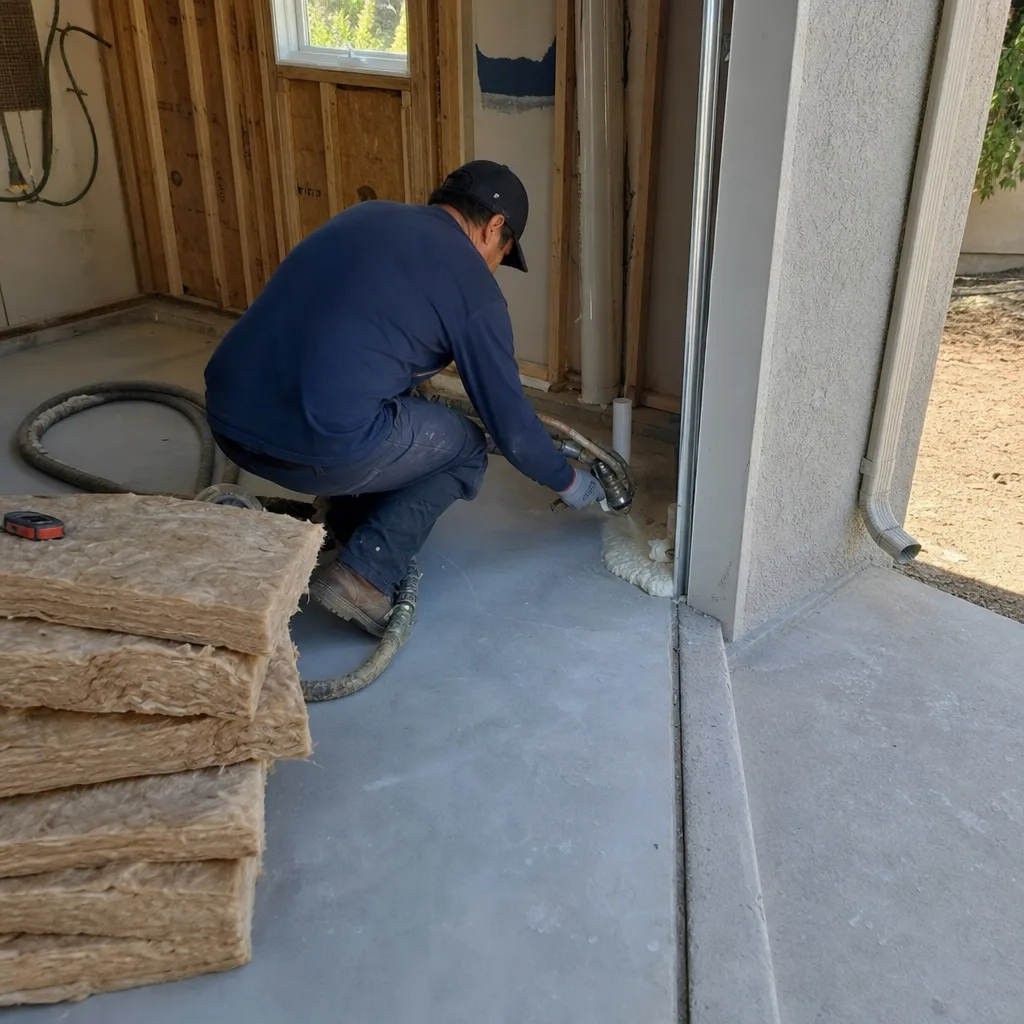
Thousand Oaks is not Los Angeles with trees. The city’s ADU environment has specific constraints that affect contractor selection and project pricing.
Zoning and Setbacks
Thousand Oaks operates under Ventura County’s sphere of influence for some unincorporated pockets, but most residential parcels fall under city zoning. The city complies with California’s state preemption, which allows ADUs by right in single-family zones. However, local design review in specific planned communities - North Ranch, Lynn Ranch, and parts of Westlake Village-adjacent areas - can impose additional aesthetic requirements. A contractor who has not worked in these specific neighborhoods may price for standard construction and discover additional siding, roofing, or window specifications at plan check.
Climate and Energy Code
Thousand Oaks sits in Climate Zone 9 under California’s Title 24 energy standards. This affects insulation R-values, glazing U-factors, and mechanical system sizing. The warm, dry summers and mild winters mean heat pump water heaters are often optimal, but the 2022 Title 24 update mandates solar readiness or solar photovoltaic systems for new detached ADUs. Your contractor should specify which path they priced: solar-ready conduit and panel space, or actual PV installation.
Wildfire exposure zones, particularly in hillside areas above Potrero Road and toward the Santa Monica Mountains, trigger Chapter 7A building material requirements. This means ignition-resistant siding, tempered glass in certain exposures, and enclosed eaves. A proposal using standard vinyl siding in a Very High Fire Hazard Severity Zone will fail plan check.
Geotechnical Realities
The Conejo Valley’s geology includes expansive clay soils derived from volcanic bedrock weathering. These soils shrink and swell with moisture change, stressing slab-on-grade foundations. A contractor who does not account for this in the foundation specification - either through post-tensioned slab design, pier and beam, or soil mitigation - is not building for the actual site condition. In our experience on Thousand Oaks projects, the difference between a standard slab and an expansive-soil-compliant foundation can run $8,000-$15,000. The permit set must specify which applies; the proposal must price accordingly.
What Must Be in Writing Before You Sign
Verbal assurances dissolve under stress. The following items must appear in the contract documents, not the sales conversation.
- Fixed-price scope with allowance schedule - Every line item that is fixed, and every item that is allowance-based, with the allowance amount and the selection deadline.
- Change-order trigger definition - What events authorize either party to request a price adjustment: concealed conditions, code changes, owner modifications, or permit delays beyond a defined threshold.
- Permit delay responsibility - Who absorbs costs if the city plan check exceeds the estimated timeline. In Thousand Oaks, plan check for ADUs typically runs 4-8 weeks, but complex hillside lots or utility coordination can extend this. The contract should define the tipping point and the cost allocation.
- Payment schedule tied to inspection milestones - Not “percent complete,” which is subjective. “Foundation inspection passed,” “rough inspection passed,” “final inspection passed.” This aligns payment with verified progress.
- Warranty document with duration and coverage - Our 365-Day Done Right Promise covers defects in workmanship and materials for one year from final inspection. It is attached to the contract, not referenced in passing.
- Documentation commitment - We provide a documented photo record on every visit. The contract should specify what documentation you receive, when, and in what format. After-the-fact summaries are not evidence.
Under Haven Standard Clause 1, the written price precedes all work. There is no “call for a quote” because the quote is already written when you receive it. This eliminates the negotiation theater that substitutes relationship for documentation.
Common Mistakes to Avoid
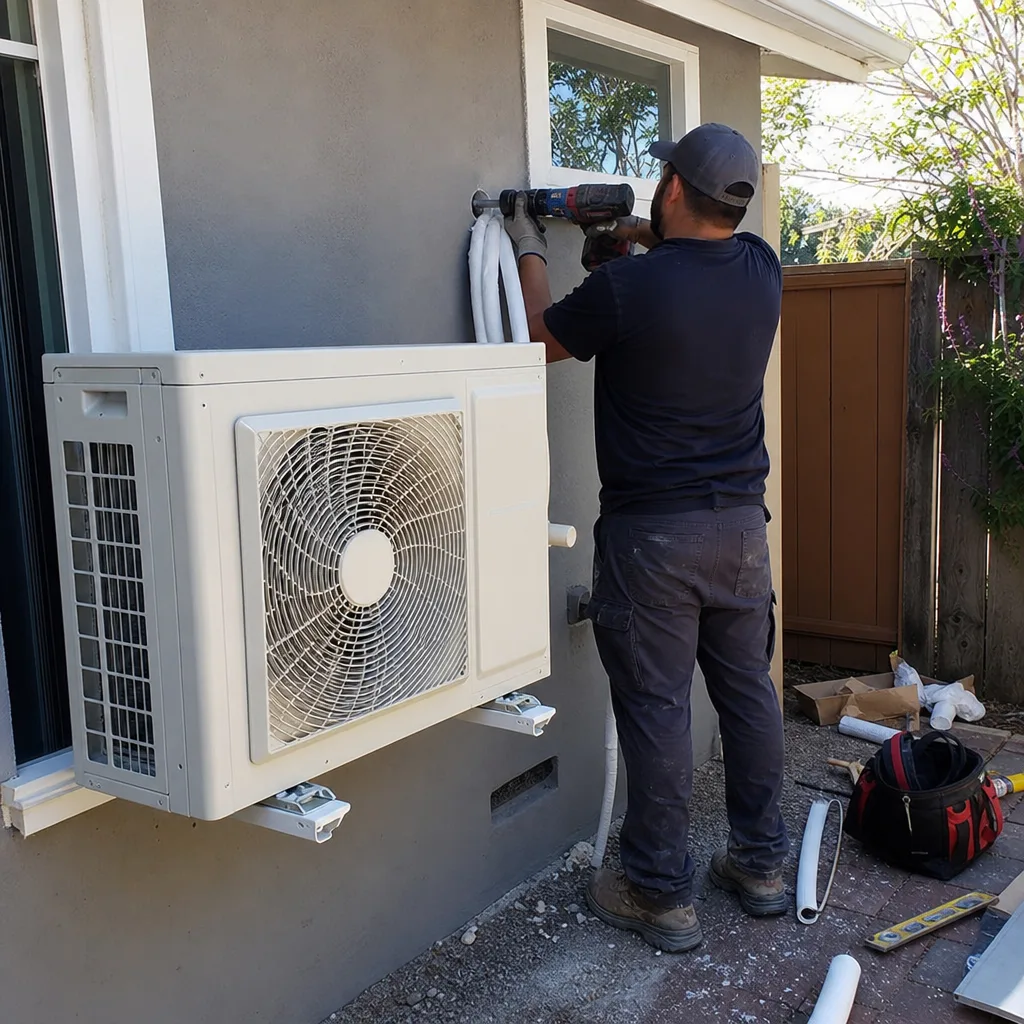
- Selecting on price alone without comparing permit sets. The $80,000 bid spread we opened with is real. The low bidder often omitted the sewer lateral replacement that the high bidder included. Neither is wrong; they are simply not comparable without the drawings.
- Hiring a general contractor who subcontracts the design. This is design-bid-build with extra steps. The GC holds your contract but outsources the permit set to a drafter you have never met. When the city requests corrections, the GC blames the drafter, the drafter blames the GC, and your timeline extends.
- Ignoring the utility service capacity. Thousand Oaks homeowners often assume their existing electrical panel and water meter can handle an ADU. In pre-1990 construction, they often cannot. The cost to upgrade service from 100A to 200A, or to install a new water meter, should be discovered in pre-construction, not at rough inspection.
- Accepting “permit included” without seeing the permit set. A contractor who says they will “handle permits” but cannot show you the drawing set they submitted is asking for trust they have not earned. The permit set is your property; you paid for it, and you need it for future sale or refinance.
- Neglecting to verify completion on the public portal. References are curated. The permit portal is not. A contractor with three glowing references and zero completed ADU permits in Thousand Oaks is not an ADU contractor.
- Signing before understanding the change-order threshold. Small projects generate small surprises. A contract with no defined threshold means every surprise generates paperwork, delay, and negotiation. Our Haven Standard specifies a $500 threshold; below it, we adjust and proceed.
- Assuming prefab is always faster. Prefab ADUs from manufacturers like Plant Prefab or Tuff Shed can compress on-site construction, but factory lead times, foundation coordination, and crane access in Thousand Oaks’ hillside neighborhoods add variables that site-built projects do not face. The total timeline may not differ significantly; the risk profile does.
When to Call a Professional
Call a professional ADU contractor when you have a rough site plan and a budget range, but before you commission standalone architectural drawings. The right contractor will help you determine whether your garage qualifies for conversion, whether your lot coverage allows a detached unit, and whether your utility service requires upgrade - all before you pay for a permit set that may need redesign.
Ellery ADU Studio Thousand Oaks offers free estimates in Thousand Oaks. We also provide a Free Second Opinion on any written estimate already in hand, with no obligation to proceed. If you are comparing proposals and cannot reconcile the numbers, we will read them against each other and identify where the assumptions diverge. Call (424) 395-4555 to schedule your free estimate.
Frequently Asked Questions
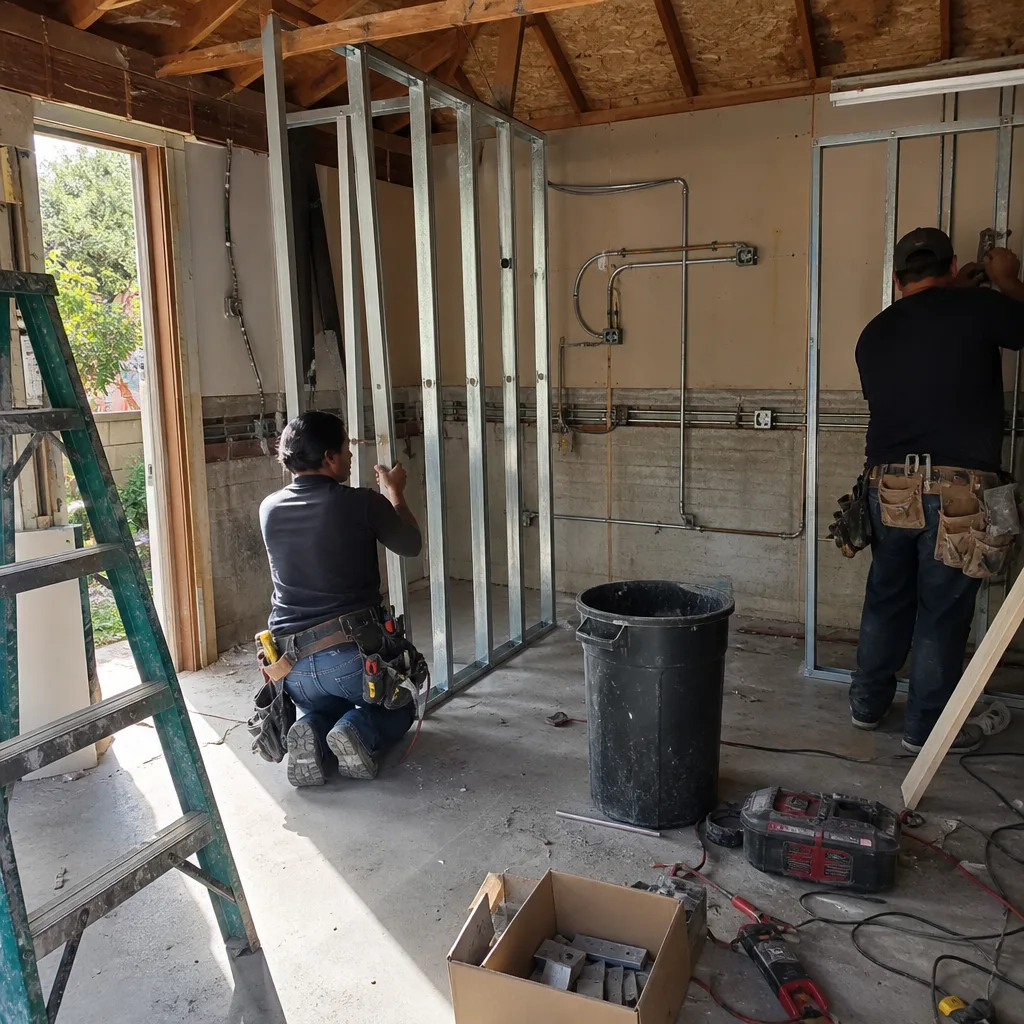
Garage conversion ADUs in Thousand Oaks typically run $180,000-$280,000 all-in, from drawings through final inspection, while new detached ADUs typically range $320,000-$480,000 depending on foundation type, utility distance, and finish level. See our ADU Cost Breakdown: The Thousand Oaks Homeowner’s Reference for 2026 for deeper analysis. These ranges reflect Conejo Valley labor rates, Title 24 energy compliance, and the geotechnical conditions common to hillside and alluvial sites. Call (424) 395-4555 for a written quote on your specific property - estimates are free, and the price is fixed before any work begins under Haven Standard Clause 1.
From permit application to final inspection, a garage conversion ADU in Thousand Oaks typically takes 8-12 months, and a new detached ADU takes 12-18 months. Plan check accounts for 1-2 months; construction accounts for the remainder. Prefab systems from brands like James Hardie or Plant Prefab can reduce on-site construction by 30-60 days but do not eliminate plan check, foundation curing, or utility coordination. Delays most often occur at utility connection, not in the structure itself.
You do not need separate entities, and for most homeowners, you should not use them. The design-build model combines architectural services, permit documentation, and construction under a single contract with a single written price. This eliminates the blame gap that opens when the architect’s drawing conflicts with the contractor’s field condition. At Garage Conversion ADU in Thousand Oaks, we deliver the permit set and the construction as one scope, so the foundation detail we draw is the foundation we build and warranty.
Thousand Oaks requires a building permit with plan check for all ADUs, plus separate permits for electrical, plumbing, and mechanical work. Our ADU Design & Permitting Maintenance Checklist for Thousand Oaks Homeowners covers the full sequence. If your ADU triggers a utility service upgrade, you may also need Southern California Edison or California American Water coordination. The city does not require a conditional use permit for ADUs by right in single-family zones, thanks to state preemption under SB 13. However, properties in specific planned communities may face additional design review; your contractor should identify this in pre-application research.
Yes, but hillside construction triggers additional geotechnical review, potentially a grading permit, and Chapter 7A wildfire-resistant materials if the lot sits in a Very High Fire Hazard Severity Zone. Foundation costs increase 15-30% for pier-and-beam or retaining wall systems compared to flat sites. A contractor without Thousand Oaks hillside experience may price for standard slab-on-grade and discover the geotechnical requirement at plan check, generating delays and change orders. We specify the foundation type in our permit set before pricing, not after.
Under a properly structured contract, the fixed-price portion should not change. Change orders occur only for defined triggers: owner-requested modifications, concealed conditions beyond reasonable investigation, or code changes enacted after permit issuance. Our Haven Standard Clause 5 locks the scope at signing; no door-side upsells, no scope creep. Allowance items convert to fixed price upon your selection within the defined deadline. If a contractor cannot explain their change-order policy in one sentence, they do not have one.
Search the City of Thousand Oaks public permit portal by contractor license number or business name. Filter for “ADU,” “second unit,” or “accessory dwelling unit” permits. Look for permits with final inspection status, not just issued or rough. Cross-reference the addresses with Google Street View to confirm the project type. A contractor with ten kitchen remodels and one ADU in Thousand Oaks is not an ADU specialist, regardless of their general construction reputation.
The Bottom Line
Hiring an ADU contractor in Thousand Oaks is not a bidding exercise. It is a contract-structure decision that determines whether your price means anything before the first shovel hits the ground. Verify license and permit history on the public portal. Select design-build or design-bid-build before requesting numbers. Demand a permit set with every proposal, and read the line items for foundation type, utility scope, and allowance definitions. Get the warranty, the documentation commitment, and the change-order policy in writing. The contractors who survive this process are the ones worth calling.
Ellery ADU Studio has operated as a design-build studio since 2015, delivering New Detached ADU in Thousand Oaks, garage conversions, junior ADUs, and site prep under one contract at one written price. A live person answers calls 24/7 at (424) 395-4555.
Written by Nadia Ellery, Owner at Ellery ADU Studio Thousand Oaks, serving Thousand Oaks since 2015.